Physical Recovery After Alcoholism. How To Regain Physical Health Once You Quit Drinking.
- Apr 27
- 11 min read

I continually state in my articles that the Alcoholics Anonymous protocol is not the way to beat the alcohol addiction. I also state that I don’t have to prove my point: the AA failure rate proves it for me. I would be pro AA if only they would change their methods. For I am thoroughly convinced that a holistic recovery program would give them the high success rates that they lack today and have lacked since the program began. I am over seventeen years sober using this method of holistic reinvention of Self. I rarely have cravings for alcohol today and if I do, they are transient and mild—usually lasting a minute or two at worst. I’m not in a state of emotional negativity, sitting in the rooms, rehashing my past every night. As a matter of fact, I rarely think about alcohol or my former days of alcoholism at all.
So what is this “holistic recovery” and “reinvention of Self” in all of your planes that I keep pontificating about? It is a transformation of the four basic planes of being. The physical plane. The emotional sphere. The career. The spiritual realm. I’ve mentioned them a great deal in the first dozen articles of this blog. Now we are going to get to the how to do it part on the first plane: the physical re-creation of being.
This advice not only goes for recent former alcoholics but anyone who has let themselves go or never were in states of good fitness in their entire lives. But it is especially essential for the recovery of alcoholism on the road to cure. For to say that one wasn’t physically healthy as an alcoholic would be a vast understatement. Processing large amounts of alcohol every night sends the body into a state of catastrophe over the long term. Everyone knows the liver will eventually be destroyed, but people don’t think about the other effects from long term alcohol abuse. Kidney failure or high blood pressure, which will lead to a heart attack or stroke. Just ask F. Scott Fitzgerald, who stood up from a chair at forty-four and consequently dropped dead when his heartbeat ceased. Or Jack London, whose diseased kidneys from a lifetime with John Barleycorn finally took him.
Now some of us were athletes during the more moderate stages of the addiction to alcohol. I was a practicing Thai boxer and in local, school run bouts every few months for a few years during this phase of my own friendship with Johnny B. I would train three hours then wash the sweat away with six to eight beers. But during the last five years of my addiction, from thirty-five to forty, I wasn’t training much at all and certainly wasn’t in the ring anymore. At that point, I was drinking over a twelve pack a night and much more on the weekends. At the end of it, I don’t think I could have run a quarter of a mile.
So the first plane that needed re-creation was the physical. The physical plane is like the foundation of bricks for your new mansion. Fitness is the base for everything. And the cement mixture that holds the bricks together is the diet. The two go hand and hand in this reinvention. They are necessary, not just for physical well-being, but to defeat alcoholism and its post effect symptoms completely. The implementation of healthy diet and a fitness program alone far exceed the tenets taught in AA.
The villain that causes most to give up in their battle against alcoholism is the craving. Especially in the first six months. But the cravings will subside if you engage in a holistic recovery program. And if you stay with it, eventually those symptoms will be as rare as I described. And a fitness program will help you greatly to wade through the interval while these symptoms are more intense in those first phases to cure.
Now, I stated in previous articles that the holistic program should begin after the forty-five day mark of sobriety. What I name as the second phase of recovery. The first phase being the five-day initial acute withdrawal period. Because from day five to somewhere between day thirty to forty-five is when the cravings will be the greatest. They will be largely continuous and intense. I recommend people in this phase to do whatever they have to in order to pass this milestone. This is when the diet may not be that healthy as one checks the days off until the end of this phase. I even recommend hanging out in the rooms of AA if you must. Just don’t adopt their protocols or mindset. You’re not going to want to start exercising here. This is survival mode.
But day forty-five is when you begin this reinvention of Self. And it starts with a physical fitness program. This was easy to formulate for myself as I have been involved in high intensity physical fitness activities since I was fourteen. Martial arts and lifting weights has always been a part of my life. So for me it was just a matter of returning to what I already knew. And it was still a slow process as I was now middle aged and had let it all go just like a college football player who lounged on the couch after his glory days were concluded.
But many don’t know how to begin a fitness routine. They sign on to the local gym, see all these machines and aren’t really sure what to do. What is a “good workout?” How hard are you supposed to train? And unfortunately, there is a lot of misinformation out there for those new to exercise, whether you are a former alcoholic or not. Look at an old episode of The Biggest Loser: People who are four hundred pounds and pumping that elliptical while being screamed at by Jillian Michaels, who seems to be intent that her client drops dead in front of her. That is not healthy at all—for anyone. Athletes don’t even train like that. We usually had three days a week of high intensity training, two days more moderate levels and one lighter day. If you go for broke every single session, pretty soon you’ll hit a burnout, over trained status and will start having negative returns. The only reason you see that sort of nonsense on your television is for ratings—plain and simple. And Jillian Michaels is a professional trainer and knows better.
The first thing you’ll have to understand is that you will have to start slow. Ideally, you will want to build to a cardio type program of forty-five to sixty minutes. You aren’t training for an Olympic event. Neither am I in my now fifties. You’re just establishing a consistent physical fitness program. When I began my return to fitness at forty, I started with three rounds on the heavy bag and a few exercises lifting weights. I built that to thirteen rounds and forty minutes with the weights. I’m also a former competitive bodybuilder, so I maintain a lifting program. But lifting weights isn’t necessary as much as the cardio fitness. As a matter of fact, many lifters are in terrible cardio condition as that sort of exercise is anaerobic. In other words, it isn’t nearly as beneficial for cardiovascular health. Or if you want to gain a little strength work, you can do fifteen minutes of weight or nautilus movements. But you don’t have to spend three hours in the gym. You should be able to wrap it up in an hour, four to five nights a week.

Which begs the next question of what is the best type of cardio work in which to engage? There isn’t a “best” type, only the best type that works for you. Some people like classes such as boot camp or Zumba. Nothing wrong with those at all. Others prefer forty-five minutes on the elliptical. You can mix it up with three fifteen minute intervals of elliptical, stationary bike, treadmill or other cardio activities. Or maybe you prefer speed walking. Is running ok? Sure, if your joints are fine with it. I used to run as part of my training. But at my mid-forties, my knees finally put the kibosh on that noise. But I’ve seen others still pulling off a few miles at a time in their sixties. The point is to get the heart rate up on a consistent basis four to five nights (or mornings) a week.
So what is the “right” increased heart rate without having a coronary episode like Michaels was trying to initiate on her poor people? It is called a target heart rate. And minus any heart issues, it is easy to calculate. And always check with your doctor before you start this program if there are possible health issues.
The target heart rate is a number that used to be hand calculated with something known as the Karvonen formula. I learned it about a million years ago on a stone tablet in physical therapy school. There is something known as a maximum heart rate which is 220-Age. Let’s take myself: 220-57 equals 163 beats a minute—or in other words, your maximum allowed pulse. The maximum pulse rate you should have for your age with exercise. The Karvonen formula plugs this number at a 60%-80% exertion rate added with your normal resting heart rate that you find while taking your pulse without exertion. You find the 60% rate and the 80% rate and train somewhere in-between.
Say you are speed walking on the treadmill. If you check your pulse after ten minutes, you should be somewhere between this 60-80% rate. The formula is given at the end of this article, but nowadays most can just plug the numbers in the internet instead of doing it manually. Just look up how to calculate target heart rate. After a while, you won’t have to check your pulse during exercise as you’ll know intuitively by your breathing where you are at. In essence, your breathing is supposed to be somewhat hard, you’re supposed to be sweating but not feeling like you are going to die like some of these gurus propagate.
Here is how I recommend that you build your program to avoid overtraining. You start three days a week. How long you engage depends on how you feel. If you last ten minutes, then that’s where you start. Ten minutes a day, three times a week. After a month, build to four or five times a week. And build the duration a minute or two each session until you reach that forty-five minutes to an hour. I go two days on and one off, which averages almost five days a week. This method mentally keeps me going as I am always close to a rest day without losing consistency. Some people exercise every other day, which is perfectly fine as we aren’t athletes anymore. Five days a week is outstanding.

Now some will tell me they don’t have the time. Nonsense. You used to drink for hours a night. You can do an hour, four to five days a week, even if it is just speed walking right from your driveway. Most will spend at least twice as much time on social media as for what I am proposing.
Next, there is the diet, which if fitness is the bricks, then the cement is this aspect of holistic recovery. First, if you used cigarettes to get through the forty-five day mark, then now is the time to eliminate this habit. That goes for everyone. Smoking is one of the dumbest things mankind has ever invented. I smoked during my last years of alcoholism and used the same nicotine to get through phase two of recovery. I quit and so can you.
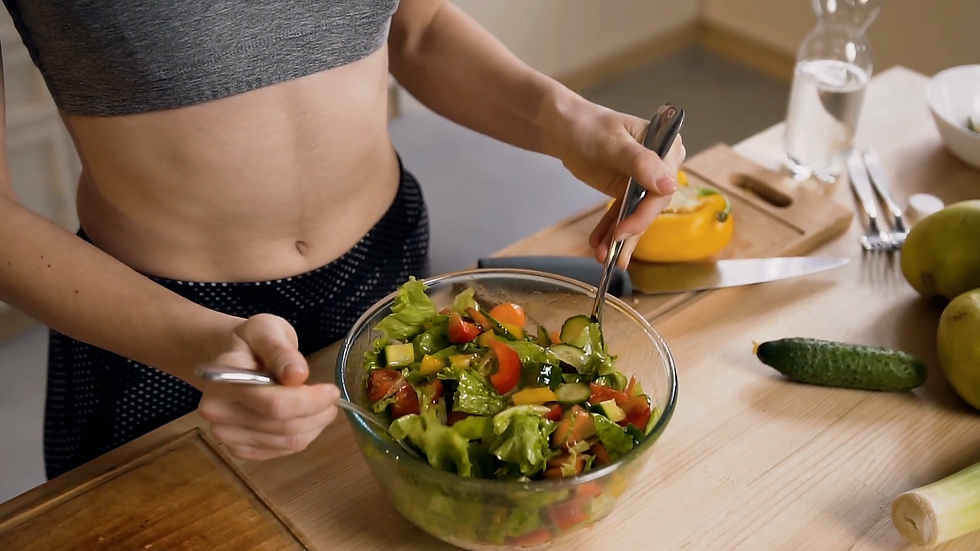
The diet is largely just decent food mixed with lots of vegetables and fruits. Good protein from fish and chicken as well as whole grains. You’ll find if you buy rice and pastas instead of those packaged dinners, your monthly grocery bill will dramatically decrease.
You can drink coffee but keep it to a few cups a day at most. I rarely touch soft drinks but do consume various juices. And the main staple is plain water. I keep sugar to a minimum. You don’t have to be a killjoy, but one small to moderate dessert a day is enough. There is a physiological reason to this when you are on your way to cure from alcoholism.
Excessive caffeine, nicotine and sugar actually induce cravings due to the physiological effect they have on the body. That’s why the set up of AA is insane. Look at them—smoking every intermission, guzzling coffee and engulfing those donor cookies. They are not only not helping themselves but hurting themselves with defeating those cravings, especially the newer members. You can use all of those additives to get through that mind blowing phase two of intense symptoms. But at day forty-five you need to bring yourself to the healthy life, not the AA life.
This combination of a physical fitness routine combined with healthy diet will do far more to bring you to normality than the AA method. The physical fitness program will constantly drop the natural endorphins into your system. And guess what the effect is from Mother Nature’s natural drug? It decreases the effects of cravings. You won’t have as many, the duration of the ones that do come won’t be as long and the intensity of them will be less. I noticed that immediately when I began my return to physiological health. They will occur on and off over the third phase to six months and fourth phase to the two year mark, which I proclaim cure.
There is nothing that matches the “high” of continuous and constant physical activity. If you continue my program, you will find that you have a new addiction—your workout. It is always hard to start, whether you have never exercised, are returning from a long layoff or are a once physiologically destroyed alcoholic. But it is like the old adage states. It is simply a matter of taking that first step and then continuing to put one foot in front of the other.
Or you can listen to the proponents of Alcoholics Anonymous. The group that has a massive failure rate and has no concept of healthy anything. The people who ingest toxins at their meetings. Who don’t go to the gym or run four days a week because that would interfere with their time in the rooms that they are afraid to leave.
I always ask the ten year sober AA member why he still feels the need to go to the rooms five and six nights a week? Why is this group so necessary for him to keep from drinking? It’s because AA has become the center point of his life force. His master status is alcoholic. The members have been programmed not to think in the realm of a holistically healthy return of Self. They have been programmed to do the Serenity Prayer, tell their story over and over and that a life without the rooms is a life of fear.
But I’m telling you to reclaim your life. And it starts with the return to physical well-being. For if you start with a life of physical fitness, you won’t be living a life of fear anymore. You’ll know what it is like to be living.
KARVONEN FORMULA FOR TARGET HEART RATE
First, find Maximum Heart Rate (Max HR): 220-Age.Then find your Resting Heart Rate (RHR): take your pulse for 60 seconds.Then plug in the numbers into this formula for 60% and 80% Target Heart Rate
60% Target Heart Rate= (Max HR –RHR) x .60 + RHR (in heart beats per minute)
80% Target Heart Rate= (Max HR-RHR) x .80 +RHR (in heart beats per minute)
AN EXAMPLE: I’m 57 years old.My MaxHR: 220-57= 163 heart beats a minute. Resting Heart Rate (RHR): took my pulse at rest: 70 beats a minute
60% Target Heart Rate: (163-70) x .60 + 70= 125 beats a minute
80% Target Heart Rate: (163-70) x.80 + 70= 144 beats a minute.
So I want to train between 125-144 beats a minute by my pulse rate/heart rate. I can check by taking my pulse at ten minutes into my program. If I am below 125, I need to pick up the pace and if over 144 I’m probably going too hard.
To journey on a tale of epic transformation on a 2,660 mile trail check out: THE SHEPHERD AND THE RUNNINGWOLF: A PATH TO FORGIVENESS ON THE PACIFIC CREST TRAIL
(Usually free on KDP)
To recreate your life on all planes for the best version of yourself as possible:REINVENTION OF SELF: HOW TO CHANGE YOUR LIFE AND BEING FOREVER
(Usually free on KDP)
For the condensed and orderly version of how I beat the addiction of alcoholism check out: THE SMALL BOOK: HOW I BEAT ALCOHOLISM AND WHY ALCOHOLICS ANONYMOUS DOESN'T WORK
(Usually free on KDP)
John Barleycorn taken from Jack London's book, John Barleycorn. First published 1913


Comments